

Neben Entwickler VIA (News), hat nun auch Nvidia einen Chipsatz für den neuen AMD Opteron angekündigt. Somit werden künftig neue Hauptplatinen sehen, die auf dem neuen nForce 3 Pro basieren werden. Erste Samples entsprechender Platinen werden momentan weltweit an große Partner Nvidia´s geliefert. Erste komplette Systeme werden für kommenden Sommer erwartet. Optimiert für Quadro FX Karten, soll der nForce 3 Pro die optimale Plattform für den Opteron sein. Genauere Informationen in der folgenden Pressemitteilung (Englisch)...
"NEW YORK CITY, NY—APRIL 22, 2003—NVIDIA Corporation (Nasdaq: NVDA), the worldwide leader in visual processing solutions, today announced that leading workstation system integrators are adopting the new NVIDIA nForce™3 Professional platform technology for their upcoming professional workstation computing systems. Optimized for NVIDIA Quadro® graphics solutions, as well as the new 64-bit AMD Opteron™ processor, NVIDIA nForce3 Professional incorporates advanced platform technology solutions—including enterprise-class networking functionality, fault tolerant storage designs and a single unified driver architecture—that are paramount to providing a compatible, stable, and reliable platform for deployment in professional computing environments.
Workstations offering NVIDIA nForce3 Professional platform processors will be available from:
“The combination of the NVIDIA nForce3 Professional platform with the industry-leading performance of NVIDIA Quadro graphics solutions forms the foundation for an extremely compelling workstation solution for CAD professionals,” said Sam Corralz, vice president of engineering at @Xi Computer Corporation. “We look forward to being one of the first companies to bring the power of NVIDIA nForce3 Professional-based workstation solutions to the market.”
“The introduction of NVIDIA nForce3 Professional-based workstations provides digital content creators, application developers, and visual effects designers with a platform that delivers tangible price and performance benefits,” said Todd Bryant, chief technology officer of BOXX Technologies. “NVIDIA has addressed the features and performance needs of the DCC community with NVIDIA nForce3 Professional, and we are pleased to begin offerings systems based on this technology in the near future.”
All NVIDIA nForce3 Professional-based systems and motherboards utilize the NVIDIA Unified Driver Architecture (UDA), a single stable system image for simplified deployment and upgrades in the enterprise environment. The NVIDIA commitment to product longevity further ensures IT investment protection. NVIDIA is also partnering with ASUSTek Computer Inc, a world leader in motherboard engineering and design, to bring NVIDIA nForce3 Professional-based motherboards to the workstation system integrator market.
Systems will available in the summer of 2003..."
Mit dem AGON PRO AG326UZD2 bringt AOC einen Gaming-Monitor auf den Markt, der anspruchsvolle Spieler mit einer Kombination aus hoher...
SanDisk erweitert sein Speicherportfolio um die Guardian Series, die speziell für Kameras mit kontinuierlicher Aufzeichnung entwickelt wurde. Die neuen Speicherkarten...
KIOXIA hat mit der LD4-Serie seine ersten SSDs im E1.L-Formfaktor auf Basis der achten Generation des BiCS FLASH QLC vorgestellt....
devolo bringt mit dem WiFi 7 BE9300 einen neuen Tri-Band-Router auf den Markt, der sich als Ethernet-Router für Glasfaseranschlüsse, Access...
BenQ erweitert seine MOBIUZ-Serie um den EX271QMZ. Der 26,5 Zoll große Gaming-Monitor setzt auf ein QD-OLED-Panel der dritten Generation mit...
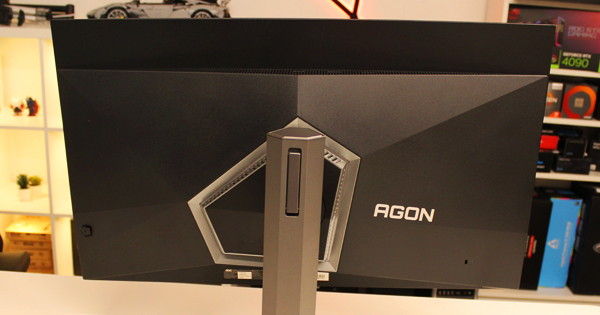
Mit dem AGON Pro AG326UZD2 hat AOC einen Gaming-Monitor mit OLED-Panel im Angebot. Der 240 Hz schnelle Monitor bietet 4K-Auflösung und weitere Features ab rund 900 Euro. Mehr dazu in unserem Test.
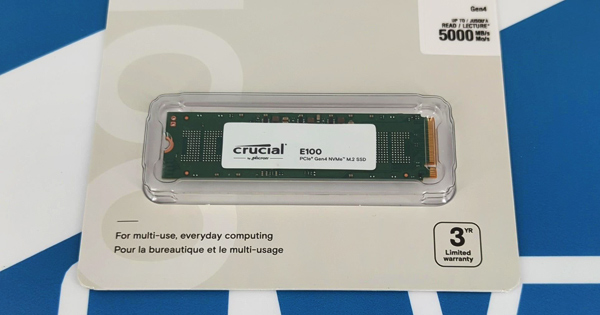
Die E100-SSD von Crucial basiert auf einem PCIe Gen4 Interface und QLC-Flashspeicher von Micron. Die Serie zielt auf Ein- und Umsteiger in die SSD-Welt ab. Wir haben uns das 1-TB-Modell im Test angesehen.