

Die EU Kommission hat heute entschieden, dass staatliche Subventionen in Höhe von rund 455 Millionen Euro für AMDs Fab 36 gewährt werden dürfen. Dies entspricht einem Anteil von 22,67 Prozent (Gesamtkosten des Baus: 2,4 Milliarden Euro). Somit sollte dem Bau nun nichts mehr im Wege stehen. Folgend ein Ausschnitt aus der offiziellen Pressemeldung der EU.
"Today, the European Commission approved investment aid to be granted for
the setting up of a microprocessor production site in Dresden Saxony. Production at this site shall start in 2005 and full capacity should be attained in 2007. The beneficiary of the aid is to AMD Fab 36 LLC & Co. KG in Dresden (Saxony). The aid authorised covers 22.67% of total investment costs of roughly € 2.4 billion. The new site will create about 1035 jobs directly
with the firm and additional 1170 jobs in the region of Saxony. As the aid is limited to 22.67 % gross of the eligible investment costs and the market for microprocessors is not in decline, the public grants will not lead to an undue
distortion of competition."
BenQ erweitert seine MOBIUZ-Serie um den EX271QMZ. Der 26,5 Zoll große Gaming-Monitor setzt auf ein QD-OLED-Panel der dritten Generation mit...
Mit der E100 1 TB SSD hält Crucial eine preisorientierte NVMe-SSD mit PCIe 4.0 x4 bereit. Das M.2-2280-Laufwerk soll laut...
Im zurückliegenden Monat gab es wieder einige spannende Themen im Bereich Newsmeldungen sowie interessante Artikel und Produkttests. Folgend möchten wir...
Razer erweitert seine Kiyo-Serie um die Kiyo V2 Pro, eine 4K-Webcam für Gamer, Streamer und Content Creator. Die Kamera nimmt...
Wer eine Leiterplattenfertigung anfragen möchte, stellt sich früher oder später dieselbe Frage: Warum dauert ein Angebot so lange, und warum...
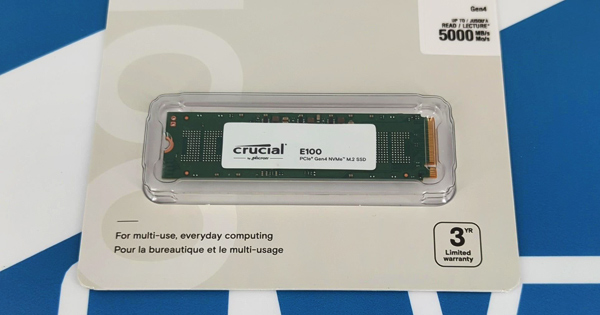
Die E100-SSD von Crucial basiert auf einem PCIe Gen4 Interface und QLC-Flashspeicher von Micron. Die Serie zielt auf Ein- und Umsteiger in die SSD-Welt ab. Wir haben uns das 1-TB-Modell im Test angesehen.
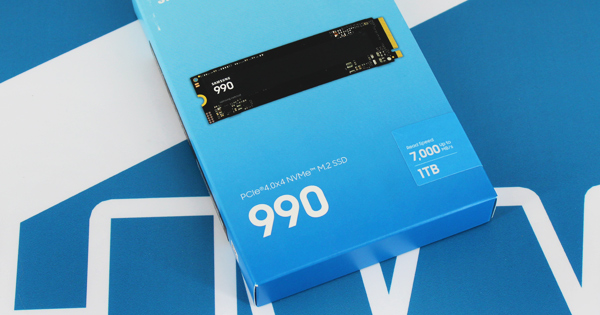
Mit der SSD-990-Familie stellt Samsung eine neue Serie von SSDs für Einsteiger vor. Wie sich die Kombination aus PCI Express Gen4 und QLC-Flashspeicher in der Praxis schlägt, klären wir am 1-TB-Modell.