

Nvidia kann zwar damit zufrieden sein, dass man den gesamten Umsatz des 3. Quartals 2002 um 18 Prozent, im Vergleich zum Vorjahres-Quartal, steigern konnte, doch mit dem Gewinn sieht das Ganze nicht mehr so rosig aus. Trotz der Umsatzsteigerung auf 430,3 Millionen, musste man einen Netto-Verlust von 48,6 Millionen US-Dollar hinnehmen. Im 3. Quartal 2001 konnte man bei 18 Prozent weniger Umsatz noch 41,3 Millionen Dollar Gewinn machen. Mehr Informationen in der offiziellen Pressemitteilung von Nvidia (Englisch)...
"SANTA CLARA, CA. – November 7, 2002 – NVIDIA® Corporation (Nasdaq: NVDA) today reported financial results for the third quarter of fiscal 2003 ended October 27, 2002.
For the third quarter of fiscal 2003, revenues increased to $430.3 million, compared to $365.0 million for the third quarter of fiscal 2002, an increase of 18 percent. Net loss for the third quarter of fiscal 2003 was $48.6 million, or $0.32 per diluted share, compared to net income of $41.3 million, or $0.24 per diluted share, for the third quarter of fiscal 2002.
The net loss for the third quarter of fiscal 2003 included a special charge of $61.8 million that resulted from the exchange of certain out-of-the-money employee stock options that had an exercise price equal to or greater than $27.00 per share for fully vested shares of the Company’s common stock. For each stock option tendered, an employee received common stock with a value equal to the number of shares underlying the stock option, multiplied by $3.20. This resulted in the issuance of 3.8 million shares of common stock and the cancellation of approximately 18.8 million options.
Revenues for the nine months ended October 27, 2002 were $1.44 billion, an increase of 66 percent compared to revenues of $865.8 million for the nine months ended October 28, 2001. Net income for the nine months ended October 27, 2002 was $39.9 million, or $0.24 per diluted share, compared to net income of $100.9 million, or $0.60 per diluted share, for the nine months ended October 28, 2001.
“We are very pleased with the performance of our core product families,” stated Jen-Hsun Huang, president and CEO of NVIDIA. “Our mainstream desktop GPUs continue to demonstrate competitive strength, and we are seeing excellent momentum and market share gains in our mobile and platform processor segments. Looking ahead, we are intensely focused on delivering our highly anticipated next generation GPU architecture which will once again redefine the market and break new ground in visual computing.”
NVIDIA will conduct a conference call with analysts and investors to discuss its third quarter fiscal 2003 financial results and current financial prospects today at 2:00 P.M. Pacific Time (5:00 P.M. Eastern Time). To listen to the call, please visit the Investor Relations section of the NVIDIA web site at http://www.nvidia.com/ir. A live web cast (listen-only mode) of the conference call will be available at the NVIDIA investor relations web site and at http://www.streetevents.com. The web cast will be recorded and available for replay until November 14, 2002..."
BenQ erweitert seine MOBIUZ-Serie um den EX271QMZ. Der 26,5 Zoll große Gaming-Monitor setzt auf ein QD-OLED-Panel der dritten Generation mit...
Mit der E100 1 TB SSD hält Crucial eine preisorientierte NVMe-SSD mit PCIe 4.0 x4 bereit. Das M.2-2280-Laufwerk soll laut...
Im zurückliegenden Monat gab es wieder einige spannende Themen im Bereich Newsmeldungen sowie interessante Artikel und Produkttests. Folgend möchten wir...
Razer erweitert seine Kiyo-Serie um die Kiyo V2 Pro, eine 4K-Webcam für Gamer, Streamer und Content Creator. Die Kamera nimmt...
Wer eine Leiterplattenfertigung anfragen möchte, stellt sich früher oder später dieselbe Frage: Warum dauert ein Angebot so lange, und warum...
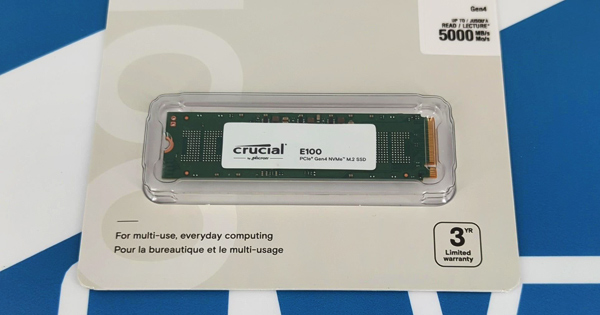
Die E100-SSD von Crucial basiert auf einem PCIe Gen4 Interface und QLC-Flashspeicher von Micron. Die Serie zielt auf Ein- und Umsteiger in die SSD-Welt ab. Wir haben uns das 1-TB-Modell im Test angesehen.
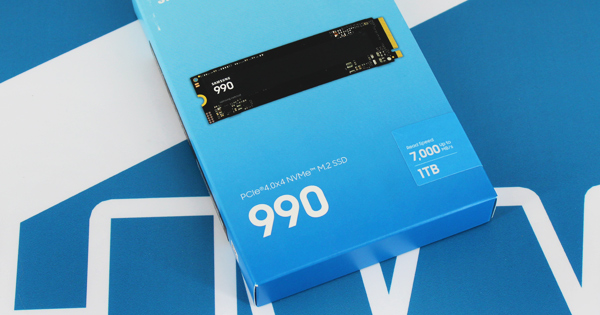
Mit der SSD-990-Familie stellt Samsung eine neue Serie von SSDs für Einsteiger vor. Wie sich die Kombination aus PCI Express Gen4 und QLC-Flashspeicher in der Praxis schlägt, klären wir am 1-TB-Modell.